






- October 30, 2026
Have you ever noticed your child covering their ears at the sound of a hand dryer, constantly bumping into furniture, or having intense meltdowns in crowded spaces? For many children, these reactions aren’t behavioral defiance; they are signs of sensory processing differences.
Understanding Sensory Processing
Our brains receive constant streams of sensory data from the world—not just through sight, hearing, touch, taste, and smell, but also through two crucial internal senses:
- Proprioception: The body’s awareness of where joints and muscles are in space, providing a grounded sense of physical stability.
- Vestibular Sense: Receptors in the inner ear that govern balance, head position, and motion.
When a child’s nervous system struggles to filter, interpret, or organize these inputs, everyday situations can feel overwhelming (hypersensitive) or under-stimulating (hyposensitive).
How Sensory Integration Therapy Works
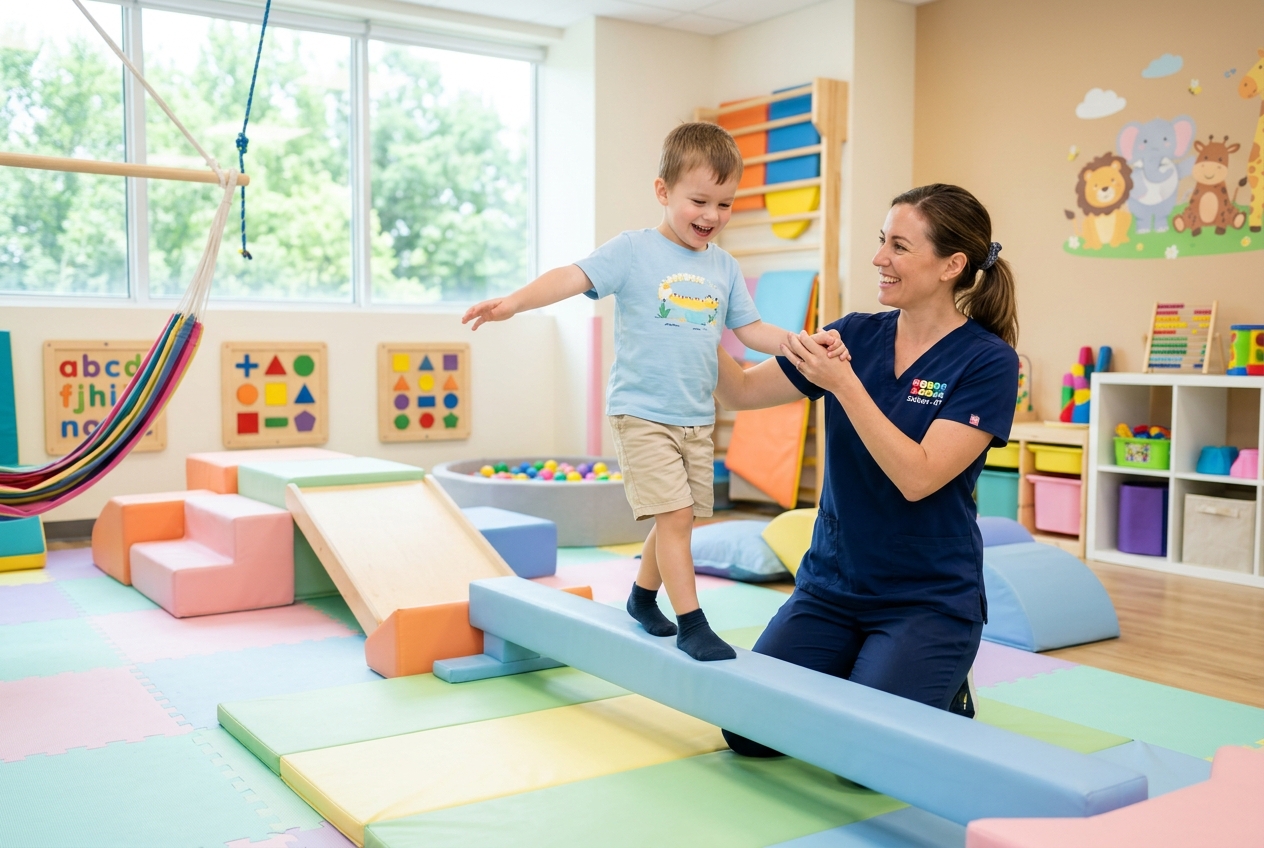
In our specialized pediatric clinic, Sensory Integration (SI) Therapy takes place in a purposefully structured, playful environment equipped with suspended swings, climbing walls, textured balance beams, and deep-pressure crash pads. Under the guidance of trained pediatric occupational therapists, children engage in tailored movement activities that:
- Help the nervous system achieve calm, regulated states.
- Enhance bilateral coordination, balance, and spatial awareness.
- Build emotional resilience and decrease anxiety in overwhelming settings.
- Improve sustained attention for classroom learning and social play.
“When a child’s sensory world feels organized and safe, their natural curiosity and joy for learning naturally unfold.”
Simple Sensory Activities for Home
Parents can easily integrate regulating activities into daily routines. Calming strategies such as deep-pressure hugs, wheelbarrow walks, animal crawling games, and creating a cozy “quiet corner” with soft pillows provide immediate regulating input when sensory fatigue sets in.